Medical technician diagnosis: 70% of medical decisions guide
"Medical laboratory scientists in healthcare settings also play an important role in clinical diagnosis; some estimates suggest that up to 70% of medical decisions are based on laboratory test results and MLS contributions affect 95% of a health system's costs."
A medical technician diagnosis involves interpreting complex biological data to guide physician decisions and patient treatment plans. This role is essential for clinical accuracy, as laboratory results underpin a massive portion of medical decision-making and healthcare system costs.
You should understand that these professionals work within strict regulatory frameworks, such as ISO 15189 accreditation, and their impact is felt across nearly all clinical diagnoses.
This guide covers their diagnostic role, professional credentials, and the regulatory landscape, though it does not cover specific laboratory automation software. 1. Laboratory results influence up to 70% of medical decisions. 2. MLS contributions affect 95% of a health system's costs. 3. Accreditation like ISO 15189 is a legal obligation for clinical laboratories. * Specialized credentials include SBB, SM, SC, and SH.
How do medical technicians perform a diagnosis?
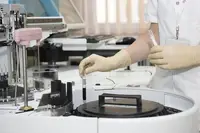
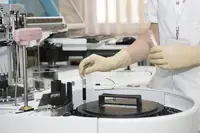
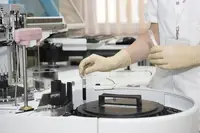
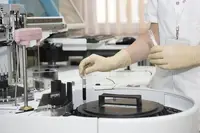
A technician adjusts the microscope lens under the bright laboratory lights, focusing on a stained blood smear. They carefully observe the cellular morphology to identify abnormalities that signal underlying disease.
This careful inspection is the core of the diagnostic tech role, ensuring that every slide is read with precision before results are sent to the physician.
The diagnostic process relies heavily on the accuracy of laboratory data. Estimates suggest that up to 70% of medical decisions are based on laboratory test results. This high level of influence means that any error in the clinical diagnostic methods can lead to incorrect patient management.
The clinical tech duties require not just technical skill, but a deep understanding of how biological variations affect the final report. Because these results are so critical, the hospital diagnostic workflow is designed to prioritize speed and precision simultaneously.
How do professionals gain specialized credentials?
At midnight, the tired student rubbed their eyes while studying for a medical certification exam at the wooden desk.
A student sits at a wooden desk, highlighting a thick textbook on hematology while preparing for a certification exam. They study the specific nuances of blood cell morphology, knowing that a specialized designation will define their career path.
This dedication to learning ensures they can provide high-level expertise in their chosen field.
Professionals can enhance their expertise through specific certifications. Many medical technologists use additional credentials provided by the American Society for Clinical Pathology (ASCP).
These include "SBB" for specialists in blood banking, "SM" for specialists in microbiology, "SC" for specialists in chemistry, or "SH" for specialists in hematology. I have seen how these specific designations allow a professional to take on more complex diagnostic tasks within a hospital setting.
How can I become a qualified technologist?
At midnight, the student rubbed their tired eyes while studying for a medical certification exam at the wooden desk. A graduate walks across a stage, receiving a diploma after completing years of rigorous academic and clinical training. They hold the paper tightly, knowing it represents the transition from student to a vital member of the medical workforce.
The journey involves both classroom theory and hands-on laboratory experience.
To qualify as a medical laboratory technologist, one typically follows these steps:
- Complete an accredited degree program, such as a two-year F.Sc degree in Medical Lab Technology offered by the College of Medical Lab Technology (CMLT) of the NIH. 2. Finish the required clinical training phase, which may involve working 40 hours per week for a period of 20 to 52 weeks. 3. Pass a standard qualifying examination, such as the Canadian Society for Medical Laboratory Science (CSMLS) exam.
After completing these steps, the individual is prepared to enter the workforce.
Which organizations oversee the profession?
A researcher enters a large government building, submitting a report to a regulatory body for review. They ensure all protocols meet the required standards, knowing that oversight is necessary to maintain public safety and laboratory integrity.
The World Health Organization plays a role in setting standards for the profession.
According to the American Society, the NCA was absorbed by the American Society for Clinical Pathology in 2009 and promptly dissolved.
This interaction between professionals and regulators is a constant in the medical field.
Several organizations provide oversight and certification for the field. The American Association of Bioanalysts (AAB), the American Medical Technologists (AMT), and the American Society for Clinical Pathology (ASCP) are key entities.
Furthermore, in Nigeria, the Medical Laboratory Science programme is regulated by the National Universities Commission (NUC) and the Medical Laboratory Science Council of Nigeria (MLSCN).
| Credential Type | Focus Area |
|---|---|
| SBB | Blood Banking |
| SM | Microbiology |
| SC | Chemistry |
| SH | Hematology |
How are medical devices regulated in the lab?
A technician inspects a new shipment of diagnostic reagents, checking the seals and expiration dates against the manifest. They ensure the equipment is calibrated according to the latest safety standards before beginning the day's testing.
The FDA oversees the regulation of medical devices used in the lab.
According to the World Health Organization, a global model regulatory framework for medical devices, including in vitro diagnostic medical devices, was published in 2017.
This vigilance prevents errors caused by faulty tools or contaminated materials.
The tools used in diagnosis are subject to strict international standards. In 2017, the World Health Organization published a global model regulatory framework for medical devices, which includes in vitro diagnostic medical devices.
Additionally, ISO 13485:2016 is applicable to all providers and manufacturers of medical devices, components, contract services, and distributors.
The cleanliness of these devices is also vital. Since 2000, following a recall of several thousand metal hip implants by Sulzer Orthopedics due to manufacturing residue, device cleanliness has come under greater scrutiny.
This oversight is guided by standards like ISO 10993 for the biological evaluation of medical devices.
What are the legal requirements for laboratories?
A laboratory manager reviews a stack of accreditation documents, ensuring every piece of equipment is logged and every protocol is updated. They prepare for an upcoming audit, knowing that compliance is not optional.
According to ISO, in 2010, modification of legislation established ISO 15189 accreditation as an obligation for all clinical laboratories.
The pressure of maintaining these standards is a constant part of laboratory leadership.
Legal requirements vary by region but often mandate specific accreditations. For instance, in 2010, modification of legislation established ISO 15189 accreditation as an obligation for all clinical laboratories.
This ensures that the laboratory maintains a high standard of quality and competence in its diagnostic outputs.
Related



Comments 0