How does clinical training work in practice?
"The clinical phase of training usually involves working 40 hours per week for 20 to 52 weeks, often with limited or no compensation."
Medical technician field training focuses on transitioning theoretical knowledge into the high-stakes environment of clinical diagnostics and device management.
This practical application is essential for professionals who support medical decisions, which can rely on laboratory results up to 70% of the time.
Key takeaways include the intensive nature of clinical rotations, the importance of regulatory compliance in device handling, and the specialized credentials required for advanced practice.
How does clinical training work in practice?
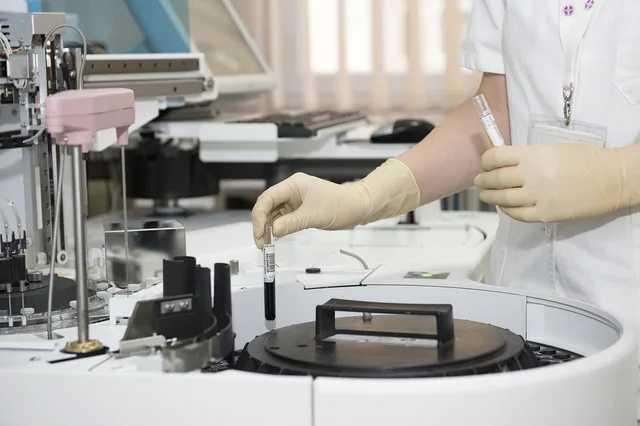
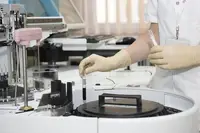
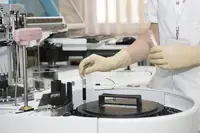
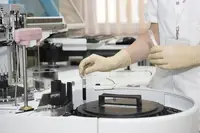
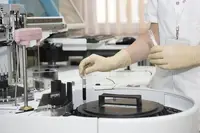
At dawn in the sterile lab, the trainee technician feels the cold metal of the pipette against their trembling fingers.
A student sits at a sterile workstation, adjusting a pipette while a supervisor watches the precise movement of their hands. This hands-on period is where the abstract concepts of biology and chemistry meet the reality of patient care.
The clinical phase of training is a demanding period where students often work 40 hours per week for a duration of 20 to 52 weeks. This phase typically provides limited or no compensation.
During this time, the student moves from the classroom to the actual healthcare setting to gain direct experience. I remember the intense focus required to maintain precision during those long shifts in the lab.
However, the effectiveness of this training is limited when there is insufficient access to diverse patient populations.
What are the shifting methods for medical training?
At midnight in the dim classroom, the weary technician rubs their eyes while staring at the glowing screen.
A professor adjusts a digital syllabus on a screen, noting the changing durations of practical rotations in modern curricula. As technology and institutional needs evolve, the way students interact with the field changes.
Shifting methods for medical training are evident in how institutions balance academic study with hands-on requirements. For example, in 2015, the MLS program at the University of Minnesota reduced the clinical rotation portion of the program from 22 weeks to 12 weeks.
This change reflects broader trends in how educational institutions structure the transition from student to professional. Such adjustments aim to meet the needs of a workforce that is expected to grow by 13% during the decade of 2010–2020.
However, these methods may not be applicable in environments with extremely limited technological infrastructure.
Why is integrating field practice in health tech vital?
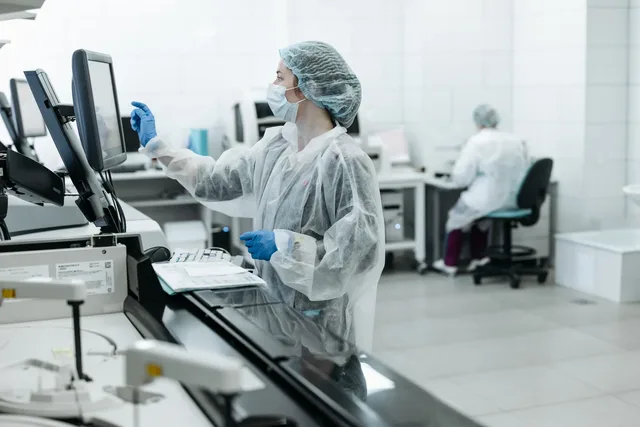
A technician carefully inspects a new piece of diagnostic equipment, checking for any residue or signs of wear. The connection between classroom learning and the physical reality of medical devices is a critical component of professional competency.
Integrating field practice in health tech ensures that workers understand the regulatory and safety standards governing the tools they use.
This includes familiarity with ISO 13485:2016, which is applicable to all providers and manufacturers of medical devices, components, contract services, and distributors of medical devices.
Understanding these standards is necessary because medical device cleanliness has come under greater scrutiny since 2000, following a recall by Sulzer Orthopedics of several thousand metal hip implants that contained manufacturing residue.
However, the benefits are diminished if the field practice lacks direct integration with real-world device data.
What does on site medical learning entail for device safety?
A trainee reads a draft guidance document on a tablet, comparing the instructions to the mobile application currently running on a handheld device. The rise of digital tools has expanded the scope of what a technician must master in a clinical setting.
On site medical learning now requires knowledge of how digital tools interact with traditional diagnostics. In 2013, the FDA issued guidance to regulate mobile medical applications and protect users from unintended use, a move followed by European and other regulatory agencies.
Students must learn to navigate these mobile health applications while adhering to the regulatory frameworks established by organizations like the World Health Organization, which published a global model regulatory framework for medical devices, including in vitro diagnostic medical devices, in 2017.
However, the training is less effective if the simulated scenarios do not mirror actual equipment failure modes.
How do students prepare for professional certification?
A graduate stares at a computer screen, reviewing the specific requirements for specialized credentials like "SM" or "SC." The path to becoming a specialist involves a rigorous sequence of education and standardized testing.
Practicum for health tech serves as the bridge to formal certification and specialized roles. The process generally follows these steps:
- Complete a foundational degree, such as the two-year F.Sc degree in Medical Lab Technology offered by the College of Medical Lab Technology (CMLT) of the NIH. 2. Graduate before taking a standard examination, such as the Canadian Society for Medical Laboratory Science (CSMLS) exam, to be qualified. 3. Pursue additional credentials from organizations like the American Society for Clinical Pathology (ASCP), which offers specialties such as "SBB" (specialist in blood banking), "SM" (specialist in microbiology), "SC" (specialist in chemistry), or "SH" (specialist in hematology).
After these steps, a final check of one's clinical competency is essential before entering the workforce. I have seen how these specific credentials significantly impact a technician's ability to manage complex diagnostic tasks.
- Review core theoretical concepts.
- Complete hands-on practical simulations.
- Undergo final competency assessments.
What are the professional standards for technicians?
A technician reviews a series of laboratory results, ensuring they align with the established protocols for clinical diagnosis. The diversity of the field means that different regions and organizations have specific ways of defining professional excellence.
According to the World Health Organization, a global model regulatory framework for medical devices, including in vitro diagnostic medical devices, was published in 2017.
According to the FDA, on September 25, 2013, the FDA released a draft guidance document for regulation of mobile medical applications, to clarify what kind of mobile apps related to health would not be regulated, and which would be.
The professional landscape is shaped by various certifying bodies and educational paths.
For instance, in Nigeria, the Medical Laboratory Science programme is the Bachelor of Medical Laboratory Science (BMLS), which is regulated by the National Universities Commission (NUC) and the Medical Laboratory Science Council of Nigeria (MLSCN).
| Credential Type | Source Organization |
|---|---|
| Specialist in Blood Banking (SBB) | ASCP |
| Specialist in Microbiology (SM) | ASCP |
The training of medical technicians is a complex process that must account for evolving technology and strict regulatory requirements.
In this sequence, the second step is the most extensive.
Related



Comments 0