Green jobs evolution in climate crisis: 50% carbon reality
"The climate crisis is no longer a distant forecast but a present reality, reshaping the global workforce through the urgent need for sustainable solutions."
The evolution of green jobs represents a strategic response to human-driven climate change, focusing on transitioning the global economy toward carbon neutrality.
This shift requires new technical skills, cross-sector collaboration, and a fundamental change in how industries manage environmental impact. This guide explores how these roles are emerging, the drivers behind this career shift, and the practical steps for professional adaptation.
Why is the green jobs evolution happening now?

An analyst stares at a heat map showing global temperature rises, noting the sharp upward trend in recent years. The necessity for a new workforce stems from the undeniable reality that the atmosphere contains roughly 50% more carbon dioxide than it did at the end of the pre-industrial era.
This accumulation of greenhouse gases drives the warming that necessitates a structural economic shift.
The urgency is underscored by recent climate data. For instance, 2024 was recorded as the warmest year since regular tracking began in 1850, reaching +1.60 °C (2.88 °F). This rapid change forces industries to pivot toward sustainable practices to meet international goals.
According to the 2021 IPCC Assessment Report, it is "unequivocal" that climate change is caused by humans. This scientific consensus provides the foundation for the green jobs evolution in climate crisis management.
Because human activity is the primary driver, the solution lies in human-led economic restructuring.
The scale of the challenge is reflected in global health and policy. The World Health Organization calls climate change one of the biggest threats to global health in the 21st century.
Consequently, the demand for climate action jobs future roles is growing as nations attempt to mitigate these health and environmental risks.
How were these sustainable job trends established?
A group of international delegates meets in a hall to sign a historic accord, marking a turning point for global employment standards. The groundwork for modern environmental work was laid through coordinated international efforts to address global warming.
These initiatives created the frameworks that define current environmental job evolution.
In 2008, the United Nations Environment Programme (UNEP), the International Labour Organization (ILO), the International Trade Union Confederation (ITUC), and the International Employers Organization (IEO) jointly launched the Green Jobs Initiative.
This collaborative effort established a baseline for what constitutes sustainable employment.
The initiative aimed to align economic growth with environmental protection. By bringing together labor, employers, and environmental agencies, the program helped define the scope of green careers. This collective action paved the way for the sustainable job trends now seen in various sectors.
The goal of these initiatives is to ensure that the transition to a low-carbon economy is inclusive and organized. This historical context explains why the green career path changes are becoming more formalized in professional training and policy.
What are the key drivers for new climate response roles?
A technician installs a solar array while a policy expert reviews carbon neutrality targets on a tablet. The drive toward new roles is fueled by specific global targets designed to limit temperature increases.
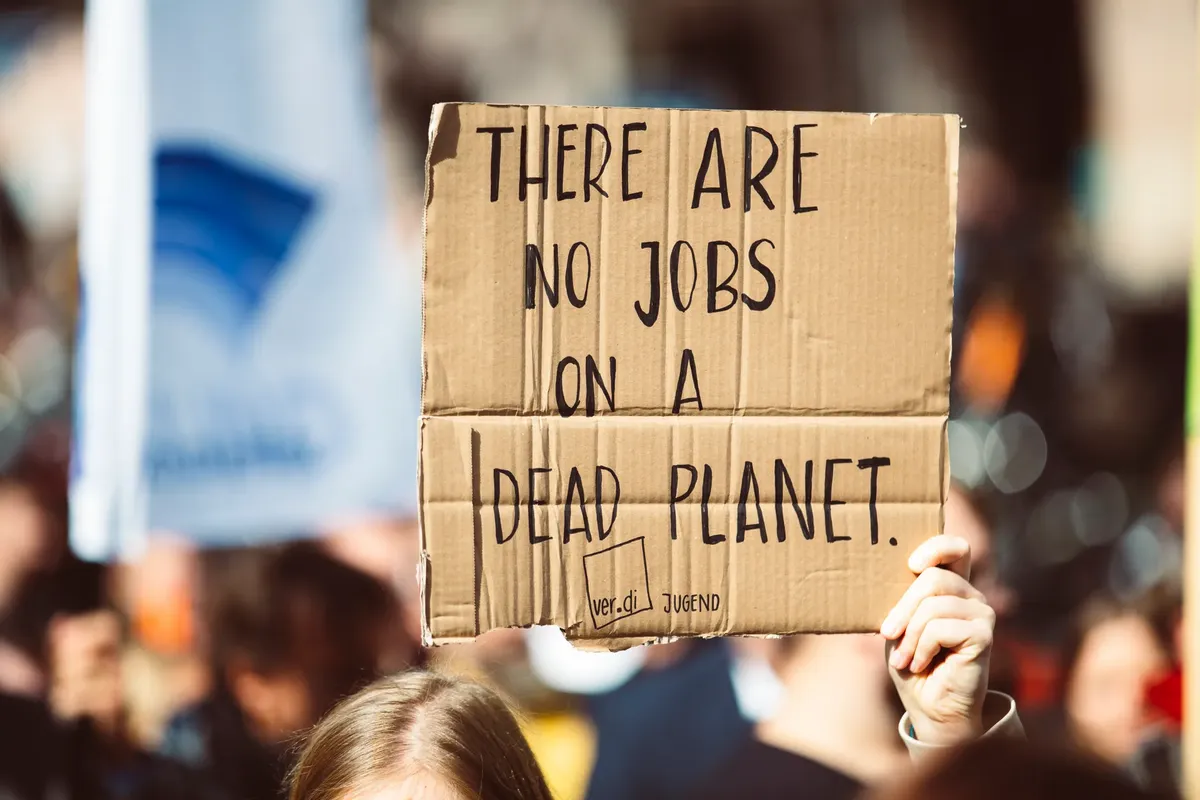
These targets create a predictable demand for specialized labor in renewable energy and efficiency.
Under the 2015 Paris Agreement, nations collectively agreed to keep warming "well under 2 °C." This specific target acts as a catalyst for industries to develop new technologies and roles. Meeting these goals requires a massive deployment of specialized talent.
However, current trajectories suggest that even with existing pledges, global warming could reach about 2.8 °C (5.0 °F) by the end of the century. This gap between current reality and treaty goals drives the need for more aggressive climate response roles.
The discrepancy highlights the scale of work remaining for the global workforce.
The transition is also driven by the need to manage the energy stored in the Earth's systems. Over 90% of the extra energy in the global climate system has been stored in the ocean since at least 1970. Managing this energy and its impacts requires advanced scientific and engineering expertise.
What are the practical green job skills needed?
A student practices using carbon accounting software to measure an organization's footprint. Preparing for a career in this field involves mastering specific technical and analytical competencies.
These skills allow professionals to bridge the gap between environmental science and industrial application.
To enter this field, professionals often follow these steps:
- Master data analysis and climate modeling to understand environmental trends and risks. 2. Gain technical certification in renewable energy systems or resource management. ly. 3. Develop expertise in sustainability reporting and carbon footprinting to meet regulatory requirements.
A final check involves verifying how these skills apply to specific industry standards and local regulations. For example, I once assisted in a project where we had to reconcile local energy output with international carbon credit requirements.
The ability to translate climate data into actionable business strategies is a core component of the green career path changes. As industries face increasing pressure to decarbonize, these skills become essential for operational survival.
How do we apply these roles to existing conditions?
A manager adjusts a factory's production schedule to align with new emission limits set by the government. Applying green roles to existing industries requires integrating sustainability into current operational frameworks.
This process involves retrofitting old systems and updating management protocols.
| Driver | Impact on Workforce |
|---|---|
| 2024 Temperature Record | Increased demand for climate adaptation roles |
| Paris Agreement Targets | Growth in renewable energy and efficiency jobs |

The transition is not a single event but a continuous process of adaptation. For instance, the European Commission presented its European Green Deal with the goal of making the EU carbon-neutral by 2050. This long-term target provides a roadmap for how roles will evolve over decades.
The transition can be difficult in sectors with high existing infrastructure. A limitation of these roles is that they must often be integrated into industries that are currently carbon-intensive, where the 2024 temperature of +1.60 °C (2.88 °F) serves as a reminder of the urgency.
- Why is the green jobs evolution happening now?
- How were these sustainable job trends established?
- What are the key drivers for new climate response roles?
Related


Comments 0